

The ROI Equation: How the Best Google Ads Agencies Prove Value
You’re running a business, investing heavily in Google Ads, and probably asking a pretty fundamental question: “Is this actually working?” It’s a fair question, and frankly, it’s one that separates the good agencies from the truly great ones. We’re not just talking about clicks and impressions here; we’re diving into the real ROI equation, the one that directly impacts your bottom line.
For many, Google Ads can feel like a black box. You put money in, and you hope sales come out. But the best Google Ads agencies don’t just hope; they prove. They build a clear, measurable bridge between ad spend and tangible business growth, a skill increasingly vital as ad platforms evolve. In fact, businesses that actively measure and optimize their digital marketing ROI are 3.5 times more likely to exceed revenue goals (HubSpot) (Source).
How Enterprise CMOs Evaluate Success Metrics
If you’re a CMO, you’re not just looking at a dashboard of metrics; you’re looking for strategic impact. You’re asking, “How do these ad dollars contribute to market share, customer lifetime value, or even new product adoption?” It’s a shift from tactical reporting to strategic validation.
And that’s where a truly effective google ads agency shines. They understand that success isn’t just about a low cost-per-click. It’s about aligning PPC performance with broader business objectives. They translate ad performance into language that resonates with the C-suite, demonstrating how their adwords management services are driving measurable enterprise value.
For enterprise CMOs, key performance indicators extend far beyond simple conversions. They demand a holistic view. Here’s what they’re typically looking for:
- Profitability per Acquisition: Not just how much it costs to get a customer, but how much profit that customer generates over time.
- Customer Lifetime Value (CLTV) Impact: How Google Ads campaigns are acquiring high-value customers who stick around longer.
- Market Share Growth: Demonstrating how increased visibility and conversions are chipping away at competitors’ dominance.
- Brand Lift and Awareness: While harder to directly attribute, a good google ads marketing agency will connect ad spend to brand perception shifts or search volume increases for branded terms.
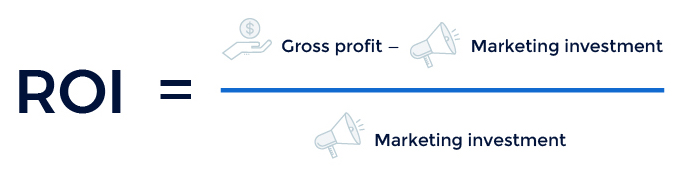
- Efficiency Ratio (ROAS vs. ROI): Moving beyond just Return on Ad Spend to a full Return on Investment, factoring in operational costs.
You see, it’s about moving beyond vanity metrics. A 20% increase in clicks means little if it doesn’t translate to a proportional increase in qualified leads or sales pipeline. A top-tier agency doesn’t just report on what happened; they interpret its significance for your overarching business strategy. They’re partners in growth, not just vendors managing ad spend.
Performance Dashboards and Real-Time Reporting
Transparency is non-negotiable, especially when you’re entrusting significant budgets to a Google Ads partner. You need to see exactly where your money is going and what it’s doing, without having to chase down reports or decipher complex spreadsheets. That’s where robust performance dashboards and real-time reporting become absolutely critical.
The best google ad agency partners don’t just send monthly reports; they provide access to dynamic dashboards that update constantly. This allows you to dive in whenever you want, seeing the immediate impact of campaign adjustments, budget shifts, and creative tests. This level of visibility fosters trust and allows for agile decision-making.
And it’s not just about raw data. These dashboards should offer insightful visualizations, highlighting trends, anomalies, and opportunities. They’re designed to tell a story, making complex data digestible for busy executives. For instance, platforms like Quickads, an AI-powered ad creation and optimization suite, help marketers automate ad testing, scale creative production, and improve campaign ROI, providing streamlined reporting that makes sense.
What should you expect from these reporting mechanisms?
- Customizable Views: Dashboards tailored to your specific KPIs, not generic templates.
- Granular Data Access: Ability to drill down from high-level summaries to individual ad group or keyword performance.
- Trend Analysis: Visualizations that clearly show performance over time, identifying upward or downward trends.
- Attribution Modeling: Clear insights into which touchpoints contributed to conversions, often utilizing multi-touch attribution models.
- Actionable Insights: Reports that don’t just present data, but also suggest next steps or explain the rationale behind recent optimizations.
This proactive, data-driven approach is what truly sets a best google ads agency apart. They’re not just managing campaigns; they’re providing you with the intelligence you need to make informed business decisions. Real-time access to performance data, coupled with expert analysis, means you’re always in the loop, always understanding the ‘why’ behind the ‘what.’ This kind of partnership significantly improves collaboration and strategic alignment, with 68% of businesses reporting improved decision-making with real-time analytics (Statista) (Source).
Benchmarking ROI Across Campaign Types
Not all Google Ads campaigns are created equal, and neither is their expected ROI. A common pitfall is to apply a one-size-fits-all ROI expectation across Search, Display, Shopping, YouTube, and Performance Max campaigns. A sophisticated google ad marketing agency knows better; they understand that each campaign type serves a distinct purpose in the marketing funnel, and therefore, requires its own set of benchmarks and success metrics.
Consider the difference: a Google Search campaign targeting high-intent keywords might have a direct, high-ROAS expectation because it’s capturing demand. But a YouTube campaign focused on brand awareness might have a lower, more indirect ROAS, instead aiming for video views, brand lift, or assisted conversions further down the line. A top-tier agency google ads team understands these nuances and sets realistic, contextual benchmarks.
It’s about having a clear strategy for each part of the funnel. You’re not just throwing money at Google; you’re strategically deploying it where it makes the most sense for specific objectives. This means a nuanced approach to measuring success, recognizing that a campaign generating early-stage leads might not have the same immediate ROAS as a direct-response campaign for a product sale.
So, what should you look for when an agency is benchmarking ROI across different campaign types?
- Clear Campaign Objectives: Each campaign type should have a defined role (e.g., brand awareness, lead generation, direct sales).
- Segmented Reporting: ROI should be broken down by campaign type, allowing for distinct analysis.
- Industry & Competitor Benchmarks: Comparing performance against relevant industry averages and competitor activity, not just internal historical data. According to WordStream (Source), average conversion rates vary significantly across industries, from 2.5% to over 11%.
- Attribution Alignment: Using appropriate attribution models that credit various campaign types for their contribution to the overall customer journey.
- Continuous Optimization: Benchmarks aren’t static; they evolve. A great agency continuously refines expectations based on ongoing performance and market changes.
Ultimately, proving value isn’t just about showing numbers; it’s about demonstrating strategic insight and a deep understanding of your business goals. When you partner with a google ad agency that excels in this, you’re not just buying ad management; you’re investing in growth, clarity, and a measurable path to success.
The ROI equation isn’t just about the final number. It’s about the transparency, the strategic alignment, and the proactive insights that lead to that number. It’s about knowing, with confidence, that your Google Ads investment is working hard for your business.